
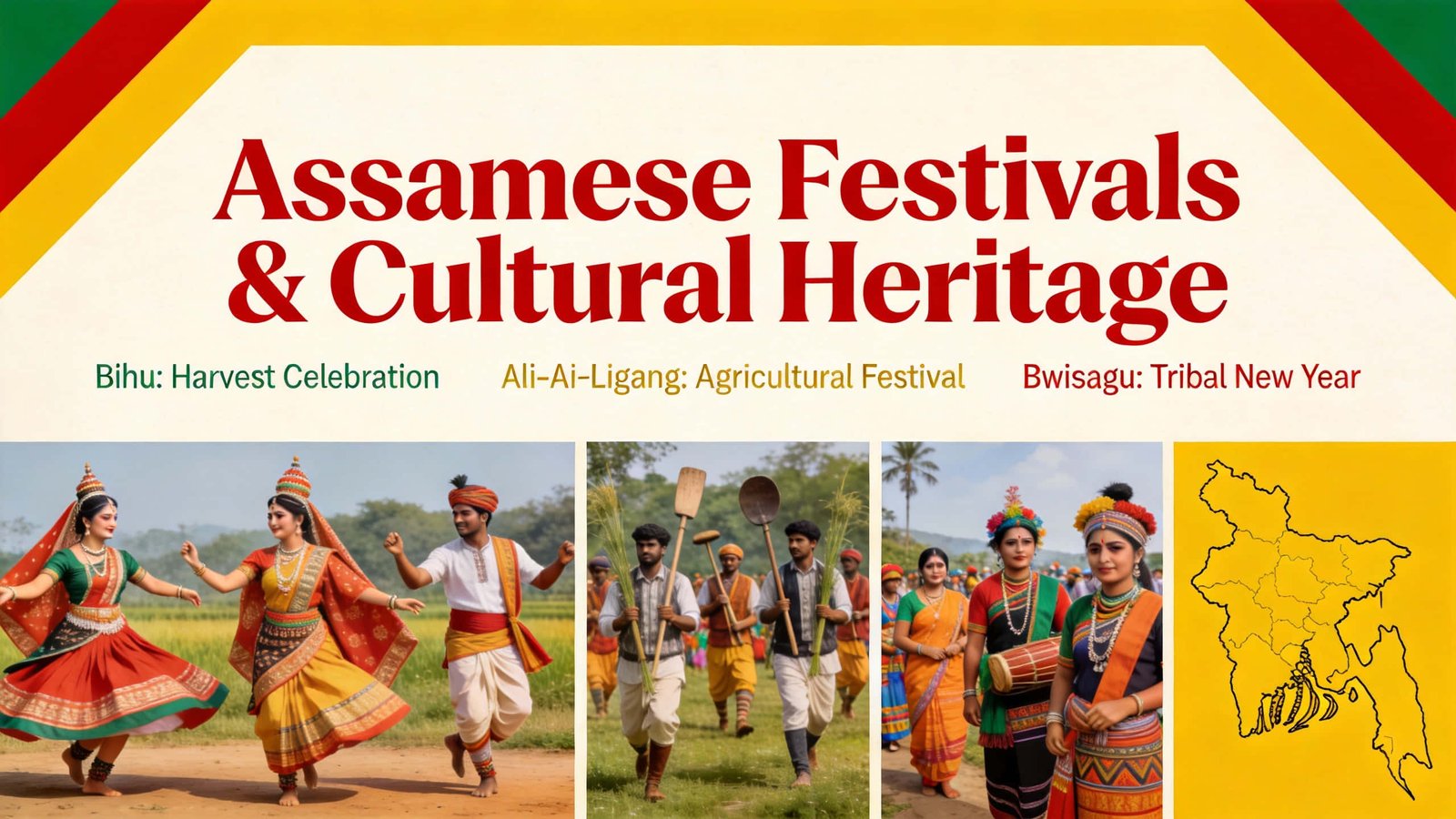
Assam Festival MCQs for APSC, Assam Police & Gauhati High Court Exam Preparation | অসমৰ উৎসৱ MCQ কুইজ (Part 3)
📘 Assam Festival MCQs – Part 3 Overview
Festivals of Assam are an important static GK topic for APSC, Assam Police, ADRE, and Gauhati High Court examinations.
This Part 3 covers major and lesser-known Assamese festivals, asked frequently in prelims and written exams.
All questions are provided in English & Assamese for better conceptual clarity.
MCQs in WhatsApp
Join Now
Job news in WhatsApp
Join Now
Facebook Page
Follow Now
🧠 Exams Where Assam Festival MCQs Are Important
- APSC Prelims
- Assam Police SI / Constable
- Gauhati High Court
- ADRE Grade III & IV
- Assam Secretariat & Other State Exams
📝 Assam Festival MCQs (English & Assamese)
Assam Festival Quiz [Part 2: 51-100]
Question 51: Which animal is traditionally worshipped during the first day of Rongali Bihu?
(ৰঙালী বিহুৰ প্ৰথম দিনটোত পৰম্পৰাগতভাৱে কোনটো প্ৰাণীক পূজা কৰা হয়?)
(ৰঙালী বিহুৰ প্ৰথম দিনটোত পৰম্পৰাগতভাৱে কোনটো প্ৰাণীক পূজা কৰা হয়?)
A) Cow (গৰু)
B) Elephant (হাতী)
C) Tiger (বাঘ)
D) Rhino (গঁড়)
Explanation: The first day of Rongali Bihu is Goru Bihu, dedicated to the worship and care of cattle.
Question 52: “Wanchuwa” is the most important festival of which community?
(“ৱাঞ্চুৱা” কোনটো সম্প্ৰদায়ৰ আটাইতকৈ গুৰুত্বপূৰ্ণ উৎসৱ?)
(“ৱাঞ্চুৱা” কোনটো সম্প্ৰদায়ৰ আটাইতকৈ গুৰুত্বপূৰ্ণ উৎসৱ?)
A) Mising (মিচিং)
B) Tiwa (তিৱা)
C) Karbi (কাৰ্বি)
D) Bodo (বড়ো)
Explanation: Wanchuwa is a major harvest festival celebrated by the Tiwa (Lalung) tribe.
Question 53: In which month is “Bhogali Bihu” celebrated?
(“ভোগালী বিহু” কোনটো মাহত পালন কৰা হয়?)
(“ভোগালী বিহু” কোনটো মাহত পালন কৰা হয়?)
A) Bohag (ব’হাগ)
B) Kati (কাতি)
C) Magh (মাঘ)
D) Phagun (ফাগুন)
Explanation: Bhogali Bihu, also known as Magh Bihu, is celebrated in the month of Magh (January).
Question 54: Which festival is known as the ‘Festival of Ancestors’ for the Tai-Ahoms?
(টাই-আহোমসকলৰ বাবে কোনটো উৎসৱক ‘পূৰ্বপুৰুষৰ উৎসৱ’ বুলি জনা যায়?)
(টাই-আহোমসকলৰ বাবে কোনটো উৎসৱক ‘পূৰ্বপুৰুষৰ উৎসৱ’ বুলি জনা যায়?)
A) Me-Dam-Me-Phi (মে-দাম-মে-ফি)
B) Ali-Aye-Ligang (আলি-আই-লৃগাং)
C) Baishagu (বৈশাগু)
D) Porag (পৰাগ)
Explanation: Me-Dam-Me-Phi is an ancestor worship festival celebrated by the Tai-Ahom community.
Question 55: The “Jonbeel Mela” is held in which district?
(“জোনবিল মেলা” কোনখন জিলাত অনুষ্ঠিত হয়?)
(“জোনবিল মেলা” কোনখন জিলাত অনুষ্ঠিত হয়?)
A) Kamrup (কামৰূপ)
B) Morigaon (মৰিগাঁও)
C) Jorhat (যোৰহাট)
D) Nagaon (নগাঁও)
Explanation: Jonbeel Mela is held at Jagiroad in Morigaon district.
Question 56: Which tribe celebrates the “Busu Dima” festival?
(“বুচু ডিমা” উৎসৱ কোনটো জনজাতিয়ে পালন কৰে?)
(“বুচু ডিমা” উৎসৱ কোনটো জনজাতিয়ে পালন কৰে?)
A) Dimasa (ডিমাছা)
B) Garo (গাৰো)
C) Rabha (ৰাভা)
D) Deori (দেউৰী)
Explanation: Busu Dima is the most important harvest festival of the Dimasa people.
Question 57: “Ambubachi Mela” is associated with which goddess?
(“অম্বুবাচী মেলা” কোনগৰাকী দেৱীৰ সৈতে জড়িত?)
(“অম্বুবাচী মেলা” কোনগৰাকী দেৱীৰ সৈতে জড়িত?)
A) Goddess Durga (দেৱী দুৰ্গা)
B) Goddess Kamakhya (দেৱী কামাখ্যা)
C) Goddess Lakshmi (দেৱী লক্ষ্মী)
D) Goddess Saraswati (দেৱী সৰস্বতী)
Explanation: Ambubachi Mela is held annually at the Kamakhya Temple in Guwahati.
Question 58: The “Karam Puja” is celebrated mainly by which group in Assam?
(অসমত “কৰম পূজা” মূলতঃ কোনটো গোটৰ দ্বাৰা উদযাপন কৰা হয়?)
(অসমত “কৰম পূজা” মূলতঃ কোনটো গোটৰ দ্বাৰা উদযাপন কৰা হয়?)
A) Tea Tribes (চাহ জনজাতি)
B) Ahoms (আহোমসকল)
C) Koch Rajbongshi (কোচ ৰাজবংশী)
D) Chutia (চুতীয়া)
Explanation: Karam Puja is a major festival of the Tea Tribe community in Assam.
Question 59: “Porag” is a grand five-day festival of which tribe?
(“পৰাগ” কোনটো জনজাতিৰ এক বৃহৎ পাঁচদিনীয়া উৎসৱ?)
(“পৰাগ” কোনটো জনজাতিৰ এক বৃহৎ পাঁচদিনীয়া উৎসৱ?)
A) Mising (মিচিং)
B) Sonowal Kachari (সোণোৱাল কছাৰী)
C) Deori (দেউৰী)
D) Karbi (কাৰ্বি)
Explanation: Porag is a post-harvest festival celebrated by the Mising community.
Question 60: Which community celebrates the “Baikho” festival for good harvest and health?
(কোনটো সম্প্ৰদায়ে ভাল শস্য আৰু স্বাস্থ্যৰ বাবে “বাইখো” উৎসৱ পালন কৰে?)
(কোনটো সম্প্ৰদায়ে ভাল শস্য আৰু স্বাস্থ্যৰ বাবে “বাইখো” উৎসৱ পালন কৰে?)
A) Bodo (বড়ো)
B) Rabha (ৰাভা)
C) Garo (গাৰো)
D) Moran (মৰাণ)
Explanation: Baikho is the principal deity festival of the Rabha community.
Question 61: What is the main food item of Magh Bihu?
(মাঘ বিহুৰ প্ৰধান খাদ্য কি?)
(মাঘ বিহুৰ প্ৰধান খাদ্য কি?)
A) Pitha (পিঠা)
B) Khar (খাৰ)
C) Masor Tenga (মাছৰ টেঙা)
D) Paramanna (পৰমান্ন)
Explanation: Different types of Pitha and Laroo are the traditional foods of Magh (Bhogali) Bihu.
Question 62: “Bare-sahariya Bhaona” is a unique festival held in which place?
(“বাৰেচহৰীয়া ভাওনা” কোনখন ঠাইত অনুষ্ঠিত হোৱা এক অনন্য উৎসৱ?)
(“বাৰেচহৰীয়া ভাওনা” কোনখন ঠাইত অনুষ্ঠিত হোৱা এক অনন্য উৎসৱ?)
A) Majuli (মাজুলী)
B) Jamugurihat (জামুগুৰিহাট)
C) Barpeta (বৰপেটা)
D) Nagaon (নগাঁও)
Explanation: Bare-sahariya Bhaona is held every few years at Jamugurihat in Sonitpur district.
Question 63: Which festival is celebrated to mark the Assamese New Year?
(অসমীয়া নৱবৰ্ষ উপলক্ষে কোনটো উৎসৱ পালন কৰা হয়?)
(অসমীয়া নৱবৰ্ষ উপলক্ষে কোনটো উৎসৱ পালন কৰা হয়?)
A) Bohag Bihu (ব’হাগ বিহু)
B) Magh Bihu (মাঘ বিহু)
C) Kati Bihu (কাতি বিহু)
D) Durga Puja (দুৰ্গা পূজা)
Explanation: Bohag Bihu (Rongali Bihu) marks the beginning of the Assamese New Year.
Question 64: “Ali-Aye-Ligang” is a spring festival. What does ‘Ligang’ mean?
(“আলি-আই-লৃগাং” এটা বসন্ত উৎসৱ। ‘লৃগাং’ মানে কি?)
(“আলি-আই-লৃগাং” এটা বসন্ত উৎসৱ। ‘লৃগাং’ মানে কি?)
A) Harvest (শস্য চপোৱা)
B) Sowing (বীজ সিঁচিবলৈ)
C) Dance (নৃত্য)
D) Water (পানী)
Explanation: ‘Ali’ means seed, ‘Aye’ means fruit/root, and ‘Ligang’ means the start of sowing.
Question 65: In which festival is the ‘Bhelaghar’ burnt?
(কোনটো উৎসৱত ‘ভেলাঘৰ’ পোৰা হয়?)
(কোনটো উৎসৱত ‘ভেলাঘৰ’ পোৰা হয়?)
A) Rongali Bihu (ৰঙালী বিহু)
B) Bhogali Bihu (ভোগালী বিহু)
C) Kati Bihu (কাতি বিহু)
D) Bhatheli (ভঠেলী)
Explanation: Bhelaghar and Meji are burnt on the morning of Magh (Bhogali) Bihu.
Question 66: “Chomangkan” is a death ritual festival of which tribe?
(“চমাংকান” কোনটো জনজাতিৰ এক মৃত্যুৰ অনুষ্ঠানমূলক উৎসৱ?)
(“চমাংকান” কোনটো জনজাতিৰ এক মৃত্যুৰ অনুষ্ঠানমূলক উৎসৱ?)
A) Karbi (কাৰ্বি)
B) Dimasa (ডিমাছা)
C) Rabha (ৰাভা)
D) Tiwa (তিৱা)
Explanation: Chomangkan is a grand death ceremony performed by the Karbi community.
Question 67: “Bhatheli” is a popular festival in which part of Assam?
(“ভঠেলী” অসমৰ কোনটো অঞ্চলৰ এক জনপ্ৰিয় উৎসৱ?)
(“ভঠেলী” অসমৰ কোনটো অঞ্চলৰ এক জনপ্ৰিয় উৎসৱ?)
A) Lower Assam (নামনি অসম)
B) Upper Assam (উজনি অসম)
C) Barak Valley (বৰাক উপত্যকা)
D) North Assam (উত্তৰ অসম)
Explanation: Bhatheli is a popular folk festival in the Kamrup and Baksa areas of Lower Assam.
Question 68: Which of the following is celebrated to worship the Sun God by some communities?
(তলৰ কোনটো কিছুমান সম্প্ৰদায়ে সূৰ্য দেৱতাক পূজা কৰিবলৈ উদযাপন কৰে?)
(তলৰ কোনটো কিছুমান সম্প্ৰদায়ে সূৰ্য দেৱতাক পূজা কৰিবলৈ উদযাপন কৰে?)
A) Chhath Puja (ছট পূজা)
B) Manasa Puja (মনসা পূজা)
C) Kali Puja (কালী পূজা)
D) Lakshmi Puja (লক্ষ্মী পূজা)
Explanation: Chhath Puja is dedicated to the Sun God and is widely celebrated in Assam by the Hindi-speaking and Bihari communities.
Question 69: “Raas Mahotsav” is most famously celebrated in which river island?
(“ৰাস মহোৎসৱ” আটাইতকৈ বিখ্যাতভাৱে কোনটো নদী দ্বীপত উদযাপন কৰা হয়?)
(“ৰাস মহোৎসৱ” আটাইতকৈ বিখ্যাতভাৱে কোনটো নদী দ্বীপত উদযাপন কৰা হয়?)
A) Majuli (মাজুলী)
B) Umananda (উমানন্দ)
C) Dibru Saikhowa (ডিব্ৰু চাইখোৱা)
D) None of these (কোনোটোৱেই নহয়)
Explanation: Majuli is world-famous for its Krishna Raas Leela or Raas Mahotsav.
Question 70: Which festival involves a ‘Barter System’ of goods?
(কোনটো উৎসৱত সামগ্ৰীৰ ‘বিনিময় প্ৰথা’ জড়িত?)
(কোনটো উৎসৱত সামগ্ৰীৰ ‘বিনিময় প্ৰথা’ জড়িত?)
A) Jonbeel Mela (জোনবিল মেলা)
B) Ambubachi Mela (অম্বুবাচী মেলা)
C) Raas Mahotsav (ৰাস মহোৎসৱ)
D) Magh Bihu (মাঘ বিহু)
Explanation: Jonbeel Mela is the only fair in India where the barter system is still practiced.
Question 71: The “Dehing Patkai Festival” is held in which district?
(“দেহিং পাটকাই উৎসৱ” কোনখন জিলাত অনুষ্ঠিত হয়?)
(“দেহিং পাটকাই উৎসৱ” কোনখন জিলাত অনুষ্ঠিত হয়?)
A) Tinsukia (তিনিচুকীয়া)
B) Dibrugarh (ডিব্ৰুগড়)
C) Jorhat (যোৰহাট)
D) Sivasagar (শিৱসাগৰ)
Explanation: It is organized by the Govt. of Assam at Lekhapani in Tinsukia district.
Question 72: “Kherai Puja” is a religious ritual of which tribe?
(“খেনাই পূজা” কোনটো জনজাতিৰ ধৰ্মীয় অনুষ্ঠান?)
(“খেনাই পূজা” কোনটো জনজাতিৰ ধৰ্মীয় অনুষ্ঠান?)
A) Bodo (বড়ো)
B) Rabha (ৰাভা)
C) Tiwa (তিৱা)
D) Mising (মিচিং)
Explanation: Kherai is a major religious dance-festival of the Bodo people.
Question 73: In which month is “Kati Bihu” celebrated?
(“কাতি বিহু” কোনটো মাহত পালন কৰা হয়?)
(“কাতি বিহু” কোনটো মাহত পালন কৰা হয়?)
A) October (অক্টোবৰ)
B) January (জানুৱাৰী)
C) April (এপ্ৰিল)
D) March (মাৰ্চ)
Explanation: Kati Bihu (Kongali Bihu) is celebrated in mid-October.
Question 74: “Bishu” is the main festival of which community in Barak Valley?
(“বিচু” বৰাক উপত্যকাৰ কোনটো সম্প্ৰদায়ৰ প্ৰধান উৎসৱ?)
(“বিচু” বৰাক উপত্যকাৰ কোনটো সম্প্ৰদায়ৰ প্ৰধান উৎসৱ?)
A) Deori (দেউৰী)
B) Moran (মৰাণ)
C) Dimasa (ডিমাছা)
D) Chutia (চুতীয়া)
Explanation: Bishu is the most important festival of the Deori community (Bohagiyo Bishu).
Question 75: “Medam-Me-Phi” is observed on which date every year?
(“মে-দাম-মে-ফি” প্ৰতি বছৰে কোনটো তাৰিখে পালন কৰা হয়?)
(“মে-দাম-মে-ফি” প্ৰতি বছৰে কোনটো তাৰিখে পালন কৰা হয়?)
A) 31st January (৩১ জানুৱাৰী)
B) 14th April (১৪ এপ্ৰিল)
C) 15th January (১৫ জানুৱাৰী)
D) 2nd October (২ অক্টোবৰ)
Explanation: Me-Dam-Me-Phi is celebrated by the Ahom community on 31st January.
Question 76: Which plant is traditionally worshipped during Kati Bihu?
(কাতি বিহুৰ সময়ত পৰম্পৰাগতভাৱে কোনটো গছক পূজা কৰা হয়?)
(কাতি বিহুৰ সময়ত পৰম্পৰাগতভাৱে কোনটো গছক পূজা কৰা হয়?)
A) Tulsi (তুলসী)
B) Banana (কল গছ)
C) Peepal (আঁহত গছ)
D) Banyan (বট গছ)
Explanation: People light earthen lamps (Akash Banti) near the Tulsi plant during Kati Bihu.
Question 77: “Rongker” is an annual festival celebrated by the?
(“ৰংকাৰ” কিমানৰ দ্বাৰা উদযাপন কৰা এটা বাৰ্ষিক উৎসৱ?)
(“ৰংকাৰ” কিমানৰ দ্বাৰা উদযাপন কৰা এটা বাৰ্ষিক উৎসৱ?)
A) Karbis (কাৰ্বি)
B) Misings (মিচিং)
C) Rabhas (ৰাভা)
D) Bodos (বড়ো)
Explanation: Rongker is an annual festival of the Karbi people to ward off evil.
Question 78: “Bathow Puja” is the most important religious festival of which tribe?
(“বাথৌ পূজা” কোনটো জনজাতিৰ আটাইতকৈ গুৰুত্বপূৰ্ণ ধৰ্মীয় উৎসৱ?)
(“বাথৌ পূজা” কোনটো জনজাতিৰ আটাইতকৈ গুৰুত্বপূৰ্ণ ধৰ্মীয় উৎসৱ?)
A) Bodo (বড়ো)
B) Tiwa (তিৱা)
C) Dimasa (ডিমাছা)
D) Mising (মিচিং)
Explanation: Bathow Puja is the supreme religious festival of the Bodo community.
Question 79: Which community celebrates the “Wangala” festival?
(কোনটো সম্প্ৰদায়ে “ৱাংগালা” উৎসৱ পালন কৰে?)
(কোনটো সম্প্ৰদায়ে “ৱাংগালা” উৎসৱ পালন কৰে?)
A) Garo (গাৰো)
B) Mising (মিচিং)
C) Rabha (ৰাভা)
D) Karbi (কাৰ্বি)
Explanation: Wangala is the most significant harvest festival of the Garo people.
Question 80: What is ‘Uruka’?
(‘উৰুকা’ মানে কি?)
(‘উৰুকা’ মানে কি?)
A) The night before Bihu (বিহুৰ আগনিশা)
B) The first day of Bihu (বিহুৰ প্ৰথম দিন)
C) A traditional song (এক পৰম্পৰাগত গীত)
D) A type of Pitha (এক প্ৰকাৰৰ পিঠা)
Explanation: Uruka is the night before Magh Bihu and Bohag Bihu where feasts are held.
Question 81: “He-Bua” is a traditional festival of which community?
(“হে-বুৱা” কোনটো সম্প্ৰদায়ৰ এক পৰম্পৰাগত উৎসৱ?)
(“হে-বুৱা” কোনটো সম্প্ৰদায়ৰ এক পৰম্পৰাগত উৎসৱ?)
A) Deori (দেউৰী)
B) Moran (মৰাণ)
C) Matak (মটক)
D) Chutia (চুতীয়া)
Explanation: He-Bua is a traditional festival related to agriculture for the Deoris.
Question 82: In which month is the “Tea Festival” of Assam held?
(অসমৰ “চাহ উৎসৱ” কোনটো মাহত অনুষ্ঠিত হয়?)
(অসমৰ “চাহ উৎসৱ” কোনটো মাহত অনুষ্ঠিত হয়?)
A) November (নৱেম্বৰ)
B) January (জানুৱাৰী)
C) April (এপ্ৰিল)
D) October (অক্টোবৰ)
Explanation: The Tea Festival is usually held in the month of November in Jorhat.
Question 83: Which festival is known as ‘Kongali Bihu’?
(কোনটো বিহুক ‘কঙালী বিহু’ বুলি কোৱা হয়?)
(কোনটো বিহুক ‘কঙালী বিহু’ বুলি কোৱা হয়?)
A) Kati Bihu (কাতি বিহু)
B) Bohag Bihu (ব’হাগ বিহু)
C) Magh Bihu (মাঘ বিহু)
D) None of these (কোনোটোৱেই নহয়)
Explanation: Kati Bihu is called Kongali because granaries are empty at this time.
Question 84: “Sokkan-Chokan” is a festival of which community?
(“চোক্কান-চোকান” কোনটো সম্প্ৰদায়ৰ উৎসৱ?)
(“চোক্কান-চোকান” কোনটো সম্প্ৰদায়ৰ উৎসৱ?)
A) Karbi (কাৰ্বি)
B) Bodo (বড়ো)
C) Mising (মিচিং)
D) Rabha (ৰাভা)
Explanation: Sokkan-Chokan is a religious festival celebrated by the Karbi tribe.
Question 85: “Bohagiyo Bishu” is celebrated by which tribe?
(“ব’হাগীয় বিচু” কোনটো জনজাতিয়ে পালন কৰে?)
(“ব’হাগীয় বিচু” কোনটো জনজাতিয়ে পালন কৰে?)
A) Deori (দেউৰী)
B) Missing (মিচিং)
C) Tiwa (তিৱা)
D) Garo (গাৰো)
Explanation: Bohagiyo Bishu is the principal festival of the Deori people.
Question 86: “Ab-Agne” is a ritual related to which festival?
(“আব-আগনে” কোনটো উৎসৱৰ সৈতে জড়িত এক অনুষ্ঠান?)
(“আব-আগনে” কোনটো উৎসৱৰ সৈতে জড়িত এক অনুষ্ঠান?)
A) Ali-Aye-Ligang (আলি-আই-লৃগাং)
B) Porag (পৰাগ)
C) Baikho (বাইখো)
D) Wanchuwa (ৱাঞ্চুৱা)
Explanation: Ab-Agne is a ritual performed by the Misings during Ali-Aye-Ligang.
Question 87: In which place “Ambubachi Mela” is celebrated?
(“অম্বুবাচী মেলা” কোনখন ঠাইত উদযাপন কৰা হয়?)
(“অম্বুবাচী মেলা” কোনখন ঠাইত উদযাপন কৰা হয়?)
A) Guwahati (গুৱাহাটী)
B) Tezpur (তেজপুৰ)
C) Sivasagar (শিৱসাগৰ)
D) Jorhat (যোৰহাট)
Explanation: Ambubachi Mela is celebrated at Kamakhya Temple, Guwahati.
Question 88: “Sankardev Tithi” marks the?
(“শংকৰদেৱৰ তিথি” কিহৰ চিন?)
(“শংকৰদেৱৰ তিথি” কিহৰ চিন?)
A) Death Anniversary (মৃত্যু বার্ষিকী)
B) Birth Anniversary (জন্ম বার্ষিকী)
C) Marriage (বিবাহ)
D) Coronation (অভিষেক)
Explanation: Sankardev Tithi is observed as the death anniversary of Mahapurush Srimanta Sankardev.
Question 89: “Madhabdev Tithi” is celebrated as a?
(“মাধৱদেৱৰ তিথি” কি হিচাপে পালন কৰা হয়?)
(“মাধৱদেৱৰ তিথি” কি হিচাপে পালন কৰা হয়?)
A) Religious Festival (ধৰ্মীয় উৎসৱ)
B) Harvest Festival (শস্য চপোৱা উৎসৱ)
C) Spring Festival (বসন্ত উৎসৱ)
D) None of these (কোনোটোৱেই নহয়)
Explanation: It is a religious day observing the death anniversary of Sri Sri Madhabdev.
Question 90: “Boro-Sahariya Bhaona” involves how many ‘Khola’ (stages)?
(“বৰ-চহৰীয়া ভাওনা”ত কেইখন ‘খোলা’ (মঞ্চ) থাকে?)
(“বৰ-চহৰীয়া ভাওনা”ত কেইখন ‘খোলা’ (মঞ্চ) থাকে?)
A) Multiple (বহুতো)
B) Only One (মাত্ৰ এখন)
C) Exactly Two (ঠিক দুখন)
D) Five (পাঁচখন)
Explanation: Bare-Sahariya Bhaona is unique because multiple plays are performed simultaneously on different stages (Khola).
Question 91: “Falgutsav” is celebrated in Barpeta Satra for?
(বৰপেটা সত্ৰত “ফাল্গুৎসৱ” কিহৰ বাবে পালন কৰা হয়?)
(বৰপেটা সত্ৰত “ফাল্গুৎসৱ” কিহৰ বাবে পালন কৰা হয়?)
A) Holi (হোলী)
B) Bihu (বিহু)
C) Durga Puja (দুৰ্গা পূজা)
D) Diwali (দীপাৱলী)
Explanation: Falgutsav or Deul is the Holi festival of Barpeta Satra.
Question 92: Which musical instrument is essential for Bihu dance?
(বিহু নৃত্যৰ বাবে কোনটো বাদ্যযন্ত্ৰ অপৰিহাৰ্য?)
(বিহু নৃত্যৰ বাবে কোনটো বাদ্যযন্ত্ৰ অপৰিহাৰ্য?)
A) Dhol (ঢোল)
B) Sitar (চিতাৰ)
C) Tabla (তবলা)
D) Flute (বংশী)
Explanation: The Dhol is considered the soul of Assamese Bihu music and dance.
Question 93: “Pepa” is made from the horn of which animal?
(“পেপা” কোনটো প্ৰাণীৰ শিঙৰ পৰা তৈয়াৰ কৰা হয়?)
(“পেপা” কোনটো প্ৰাণীৰ শিঙৰ পৰা তৈয়াৰ কৰা হয়?)
A) Buffalo (ম’হ)
B) Cow (গৰু)
C) Rhino (গঁড়)
D) Deer (হৰিণা)
Explanation: A traditional Pepa is made from the horn of a buffalo.
Question 94: “Gogona” is a musical instrument made of?
(“গগণা” কিহেৰে তৈয়াৰী এক বাদ্যযন্ত্ৰ?)
(“গগণা” কিহেৰে তৈয়াৰী এক বাদ্যযন্ত্ৰ?)
A) Bamboo (বাঁহ)
B) Wood (কাঠ)
C) Metal (ধাতু)
D) Bone (হাড়)
Explanation: Gogona is a small, traditional instrument made of bamboo, played by Bihu dancers.
Question 95: Which festival is celebrated to mark the end of the harvest season?
(শস্য চপোৱাৰ শেষৰ চিন হিচাপে কোনটো উৎসৱ পালন কৰা হয়?)
(শস্য চপোৱাৰ শেষৰ চিন হিচাপে কোনটো উৎসৱ পালন কৰা হয়?)
A) Magh Bihu (মাঘ বিহু)
B) Bohag Bihu (ব’হাগ বিহু)
C) Kati Bihu (কাতি বিহু)
D) Raas (ৰাস)
Explanation: Magh Bihu (Bhogali Bihu) is a harvest festival celebrated when the granaries are full.
Question 96: “Daminda” is a traditional folk dance of which tribe?
(“দামিন্দা” কোনটো জনজাতিৰ এক পৰম্পৰাগত লোকনৃত্য?)
(“দামিন্দা” কোনটো জনজাতিৰ এক পৰম্পৰাগত লোকনৃত্য?)
A) Garo (গাৰো)
B) Bodo (বড়ো)
C) Tiwa (তিৱা)
D) Karbi (কাৰ্বি)
Explanation: Daminda is a popular folk dance of the Garo community.
Question 97: What is the main ritual of the “Goru Bihu”?
(“গৰু বিহু”ৰ প্ৰধান অনুষ্ঠান কি?)
(“গৰু বিহু”ৰ প্ৰধান অনুষ্ঠান কি?)
A) Bathing cattle (গৰুক গা ধুউৱা)
B) Singing songs (গীত গোৱা)
C) Weaving cloth (কাপোৰ বোৱা)
D) Fasting (উপবাস)
Explanation: On Goru Bihu, cattle are taken to rivers/ponds, washed with turmeric and pulses, and prayed for.
Question 98: “Manuh Bihu” falls on which day of Bohag Bihu?
(“মানুহ বিহু” ব’হাগ বিহুৰ কোনটো দিনত পৰে?)
(“মানুহ বিহু” ব’হাগ বিহুৰ কোনটো দিনত পৰে?)
A) Second Day (দ্বিতীয় দিন)
B) First Day (প্ৰথম দিন)
C) Last Day (অন্তিম দিন)
D) Third Day (তৃতীয় দিন)
Explanation: The first day is Goru Bihu, and the second day (the first day of the month of Bohag) is Manuh Bihu.
Question 99: Which community celebrates the “Saman-kan” festival?
(কোনটো সম্প্ৰদায়ে “চামন-কান” উৎসৱ পালন কৰে?)
(কোনটো সম্প্ৰদায়ে “চামন-কান” উৎসৱ পালন কৰে?)
A) Karbis (কাৰ্বি)
B) Rabhas (ৰাভা)
C) Misings (মিচিং)
D) Ahoms (আহোম)
Explanation: Saman-kan is a ritualistic festival of the Karbi people.
Question 100: “Bihu” is a festival of?
(“বিহু” কাৰ উৎসৱ?)
(“বিহু” কাৰ উৎসৱ?)
A) All Assamese (সকলো অসমীয়াৰ)
B) Only Hindus (কেৱল হিন্দুৰ)
C) Only Farmers (কেৱল খেতিয়কৰ)
D) Only Youths (কেৱল যুৱক-যুৱতীৰ)
Explanation: Bihu is the national festival of Assam, celebrated by all Assamese people regardless of caste, creed, or religion.
Quiz Report Card
Total Questions Attempted: 0
Correct Answers: 0
Wrong Answers: 0
Percentage Score: 0%
Also Read
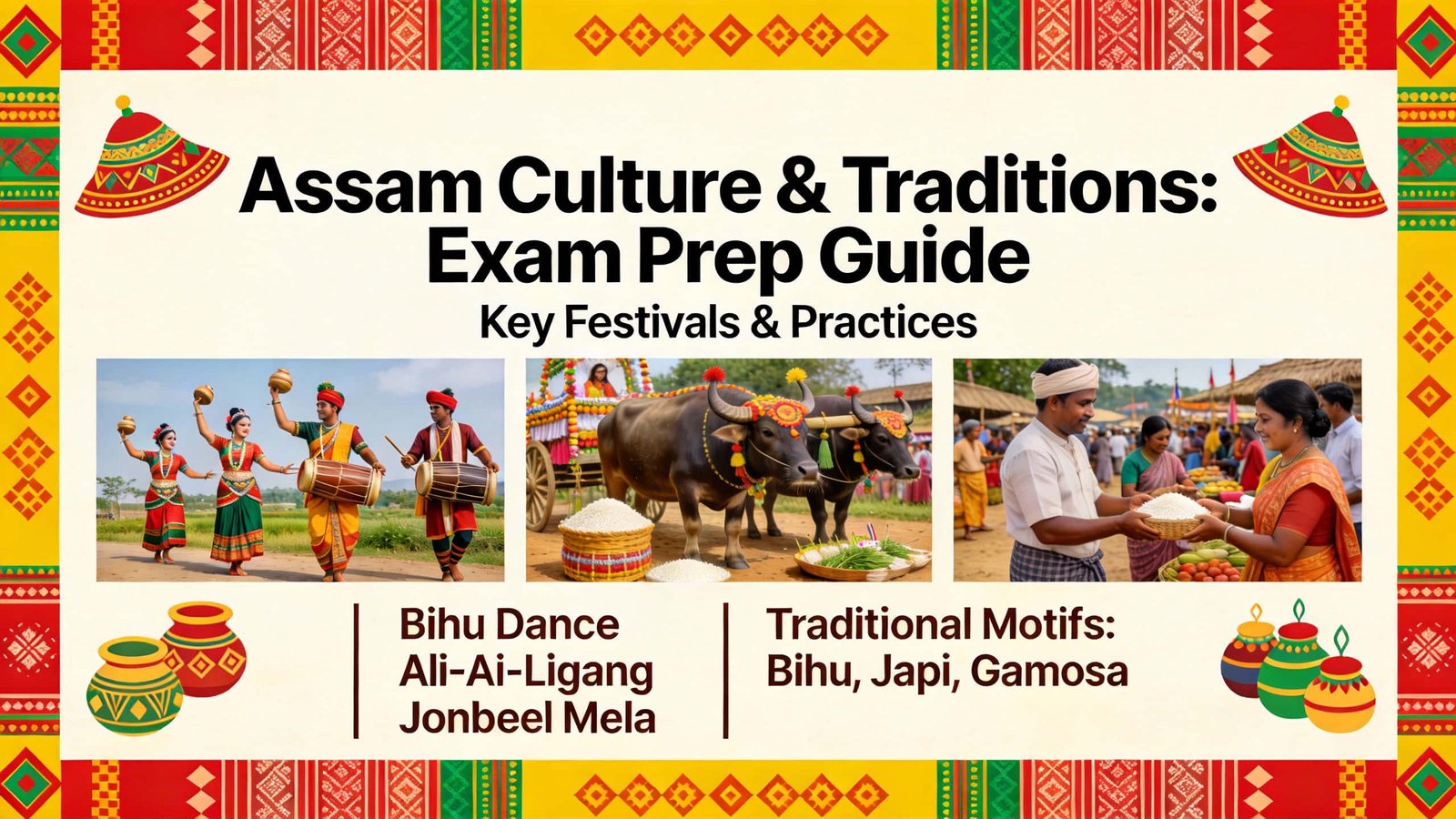
🎯 How to Prepare Assam Festival MCQs for Exams?
🔹 1. Focus on Community–Festival Mapping
Most questions are asked from festival vs tribe/community (e.g., Bwisagu – Bodo, Ali-Ai-Ligang – Mising).
🔹 2. Read Assam Culture from SCERT & NCERT
Use Assam SCERT Social Science books and Class 6–10 NCERT History/Culture chapters.
🔹 3. Make Short Festival Notes
Prepare one-line notes including:
- Festival name
- Community
- Season / Month
- Purpose
🔹 4. Practice MCQs Daily
Solve 10–15 MCQs daily to retain static GK effectively.
🔹 5. Revise Before Exams
Festival questions are high-scoring and direct, perfect for last-minute revision.