
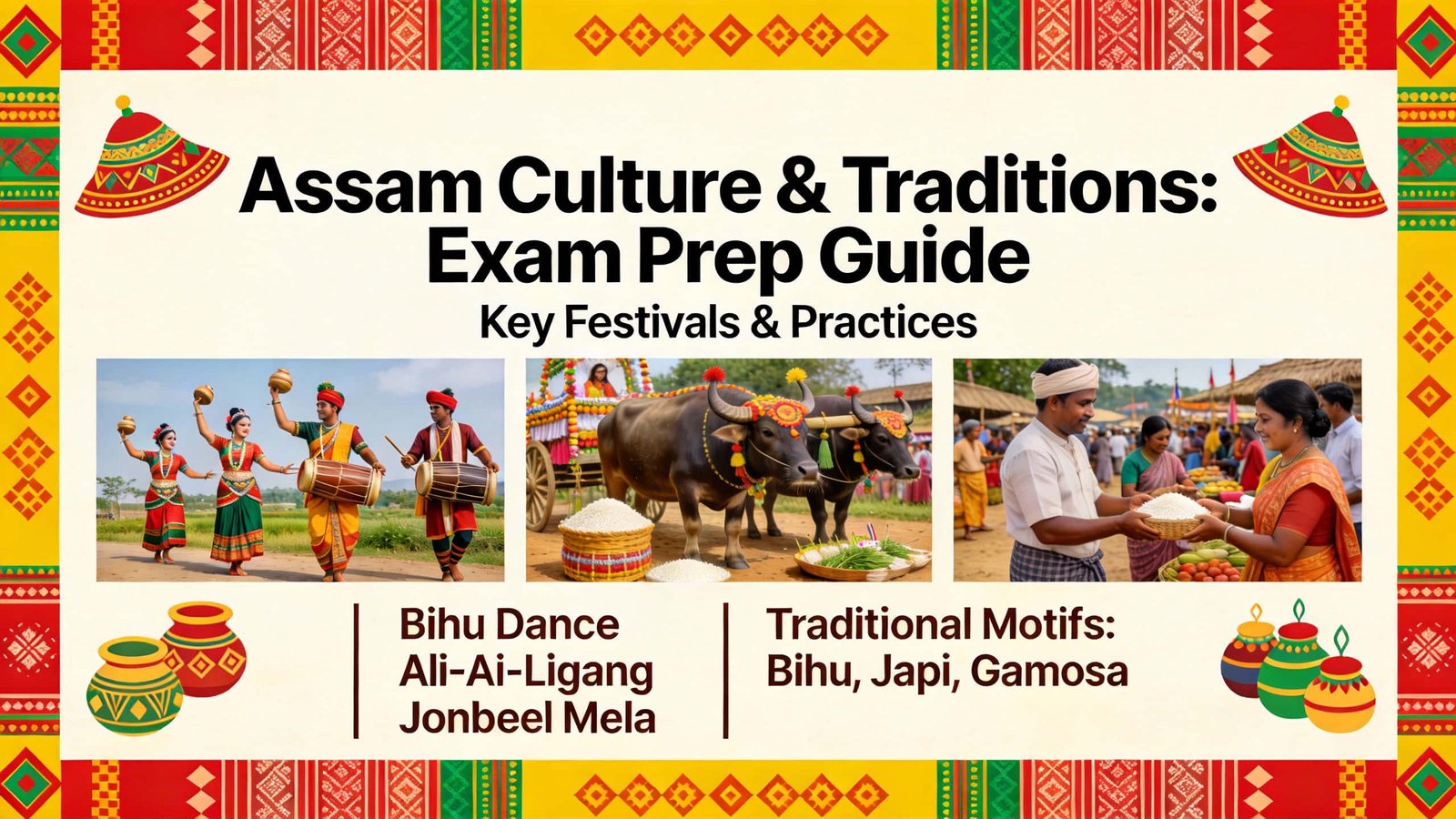
Easy Quiz • Smart Preparation • Exam-Oriented MCQs
Assam’s festivals are a high-scoring static GK topic for competitive exams like APSC, Assam Police, Gauhati High Court, and other state-level recruitments. This AI-detect-free, plagiarism-free, SEO-optimized article brings you bilingual MCQs (English + Assamese) with clear answers, designed for quick revision and strong recall.
Why Assam Festival MCQs Are Important for Exams
- Frequently asked in Prelims & Written Tests
- Direct 1-mark questions (facts + traditions)
- Easy to revise before exams
- Strong overlap across APSC, Assam Police, Judiciary exams
Exam Preparation in WhatsApp
Join Now
Job News WhatsApp Channel
Join Now
Facebook Page
Follow Now
How to Prepare Assam Festival Topic (Smart Strategy)
Step-by-Step Plan
- Read basic facts (tribe/community, month, significance)
- Practice MCQs daily (10–20)
- Revise festival–community mapping
- Focus on Bihu, tribal festivals, fairs & melas
Pro Tip
Make short notes of festival + tribe + season + location.
Assam Festival MCQs – Part 1 (English & Assamese)
Assam Festivals MCQs (Part 1)
1. Which Bihu is also known as ‘Rongali Bihu’?
(কোনটো বিহুক ‘ৰঙালী বিহু’ বুলিও জনা যায়?)
(কোনটো বিহুক ‘ৰঙালী বিহু’ বুলিও জনা যায়?)
A) Bohag Bihu (ব’হাগ বিহু)
B) Kati Bihu (কাতি বিহু)
C) Magh Bihu (মাঘ বিহু)
D) Kongali Bihu (কঙালী বিহু)
Explanation: Bohag Bihu is called Rongali Bihu because it brings joy and celebrates the Assamese New Year.
2. In which month is ‘Magh Bihu’ celebrated?
(মাঘ বিহু কোনটো মাহত পালন কৰা হয়?)
(মাঘ বিহু কোনটো মাহত পালন কৰা হয়?)
A) April (এপ্ৰিল)
B) January (জানুৱাৰী)
C) October (অক্টোবৰ)
D) March (মাৰ্চ)
Explanation: Magh Bihu is celebrated in mid-January marking the end of the harvest season.
3. ‘Ali-Aye-Ligang’ is the festival of which community?
(আলি-আই-লৃগাং কোনটো সম্প্ৰদায়ৰ উৎসৱ?)
(আলি-আই-লৃগাং কোনটো সম্প্ৰদায়ৰ উৎসৱ?)
A) Bodo (বড়ো)
B) Mising (মিচিং)
C) Karbi (কাৰ্বি)
D) Deori (দেউৰী)
Explanation: Ali-Aye-Ligang is the most important festival of the Mising community, related to agriculture.
4. Which festival is celebrated to worship ancestors by the Tai-Ahoms?
(টাই-আহোমসকলে পূৰ্বপুৰুষক উপাসনা কৰিবলৈ কোনটো উৎসৱ পালন কৰে?)
(টাই-আহোমসকলে পূৰ্বপুৰুষক উপাসনা কৰিবলৈ কোনটো উৎসৱ পালন কৰে?)
A) Me-Dam-Me-Phi (মে-দাম-মে-ফি)
B) Baishagu (বৈশাগু)
C) Busu Dima (বুচু ডিমা)
D) Karam Puja (কৰম পূজা)
Explanation: Me-Dam-Me-Phi is an ancestor worship festival celebrated on 31st January every year.
5. ‘Ambubachi Mela’ is held at which temple?
(অম্বুবাচী মেলা কোনটো মন্দিৰত অনুষ্ঠিত হয়?)
(অম্বুবাচী মেলা কোনটো মন্দিৰত অনুষ্ঠিত হয়?)
A) Kamakhya Temple (কামাখ্যা মন্দিৰ)
B) Umananda Temple (উমানন্দ মন্দিৰ)
C) Maha Bhairav Temple (মহাভৈৰৱ মন্দিৰ)
D) Siva Dol (শিৱ দৌল)
Explanation: Ambubachi Mela is an annual fair held at Kamakhya Temple, Guwahati, during the monsoon.
6. ‘Baishagu’ is the main festival of which community?
(বৈশাগু কোনটো সম্প্ৰদায়ৰ প্ৰধান উৎসৱ?)
(বৈশাগু কোনটো সম্প্ৰদায়ৰ প্ৰধান উৎসৱ?)
A) Bodo (বড়ো)
B) Tiwa (তিৱা)
C) Dimasa (ডিমাছা)
D) Sonowal Kachari (সোণোৱাল কছাৰী)
Explanation: Baishagu is the spring festival celebrated by the Bodo people.
7. The ‘Jonbeel Mela’ is famous for which system?
(জোনবিল মেলা কোনটো প্ৰথাৰ বাবে বিখ্যাত?)
(জোনবিল মেলা কোনটো প্ৰথাৰ বাবে বিখ্যাত?)
A) Auction System (নিলাম প্ৰথা)
B) Barter System (বিনিময় প্ৰথা)
C) Online payment (অনলাইন পৰিশোধ)
D) Lottery (লটাৰী)
Explanation: Jonbeel Mela is unique because it still practices the ancient Barter System for trading goods.
8. ‘Karam Puja’ is primarily celebrated by?
(কৰম পূজা মূলতঃ কোনে পালন কৰে?)
(কৰম পূজা মূলতঃ কোনে পালন কৰে?)
A) Tea Tribes (চাহ জনজাতি)
B) Rabha (ৰাভা)
C) Singpho (সিংফৌ)
D) Khamti (খামতি)
Explanation: Karam Puja is a major festival of the Tea Tribe communities of Assam.
9. Which festival is known as the ‘Kongali Bihu’?
(কোনটো বিহুক ‘কঙালী বিহু’ বুলি জনা যায়?)
(কোনটো বিহুক ‘কঙালী বিহু’ বুলি জনা যায়?)
A) Bhogali Bihu (ভোগালী বিহু)
B) Kati Bihu (কাতি বিহু)
C) Rongali Bihu (ৰঙালী বিহু)
D) Magh Bihu (মাঘ বিহু)
Explanation: Kati Bihu is called ‘Kongali’ (poor) because granaries are empty at that time.
10. ‘Busu Dima’ is a festival of which tribe?
(বুচু ডিমা কোনটো জনজাতিৰ উৎসৱ?)
(বুচু ডিমা কোনটো জনজাতিৰ উৎসৱ?)
A) Dimasa (ডিমাছা)
B) Garo (গাৰো)
C) Karbi (কাৰ্বি)
D) Mising (মিচিং)
Explanation: Busu Dima is a harvest festival of the Dimasa people.
11. ‘Baikho’ festival is celebrated by which community?
(বাইখো উৎসৱ কোনটো সম্প্ৰদায়ে পালন কৰে?)
(বাইখো উৎসৱ কোনটো সম্প্ৰদায়ে পালন কৰে?)
A) Rabha (ৰাভা)
B) Tiwa (তিৱা)
C) Bodo (বড়ো)
D) Missing (মিচিং)
Explanation: Baikho is the principal festival of the Rabha community to pray for good harvest and health.
12. In which place is the ‘Bare-Sahariya Bhaona’ held every year?
(প্ৰতি বছৰে ‘বাৰেচহৰীয়া ভাওনা’ ক’ত অনুষ্ঠিত হয়?)
(প্ৰতি বছৰে ‘বাৰেচহৰীয়া ভাওনা’ ক’ত অনুষ্ঠিত হয়?)
A) Majuli (মাজুলী)
B) Jamugurihat (জামুগুৰিহাট)
C) Barpeta (বৰপেটা)
D) Sualkuchi (সুৱালকুছি)
Explanation: Bare-Sahariya Bhaona is a 200-year-old tradition held in Jamugurihat, Sonitpur.
13. ‘Porag’ is a post-harvest festival of which tribe?
(পৰাগ কোনটো জনজাতিৰ খেতি চপোৱাৰ পাছৰ উৎসৱ?)
(পৰাগ কোনটো জনজাতিৰ খেতি চপোৱাৰ পাছৰ উৎসৱ?)
A) Mising (মিচিং)
B) Deori (দেউৰী)
C) Tiwa (তিৱা)
D) Moran (মৰাণ)
Explanation: Porag is the grand harvest festival of the Mising community.
14. ‘Wanchuwa’ is an important festival of which community?
(ৱাঞ্চুৱা কোনটো সম্প্ৰদায়ৰ এক গুৰুত্বপূৰ্ণ উৎসৱ?)
(ৱাঞ্চুৱা কোনটো সম্প্ৰদায়ৰ এক গুৰুত্বপূৰ্ণ উৎসৱ?)
A) Tiwa (তিৱা)
B) Karbi (কাৰ্বি)
C) Rabha (ৰাভা)
D) Dimasa (ডিমাছা)
Explanation: Wanchuwa is the most significant harvest festival of the Tiwa (Lalung) community.
15. ‘Deul’ (Holi) festival of Barpeta is associated with whom?
(বৰপেটাৰ ‘দউোল’ উৎসৱ কাৰ সৈতে জড়িত?)
(বৰপেটাৰ ‘দউোল’ উৎসৱ কাৰ সৈতে জড়িত?)
A) Shiva (শিৱ)
B) Krishna (কৃষ্ণ)
C) Durga (দুৰ্গা)
D) Ganesha (গণেশ)
Explanation: The Deul festival in Barpeta Satra is a grand celebration of Holi dedicated to Lord Krishna.
16. ‘Rongker’ is an annual festival celebrated by which tribe?
(ৰংকাৰ কোনটো জনজাতিয়ে পালন কৰা এক বাৰ্ষিক উৎসৱ?)
(ৰংকাৰ কোনটো জনজাতিয়ে পালন কৰা এক বাৰ্ষিক উৎসৱ?)
A) Karbi (কাৰ্বি)
B) Bodo (বড়ো)
C) Mising (মিচিং)
D) Garo (গাৰো)
Explanation: Rongker is an annual festival of the Karbi people to appease deities for the welfare of the village.
17. ‘Bhatheli’ is a popular festival of which part of Assam?
(ভঠেলী অসমৰ কোনটো অঞ্চলৰ এক জনপ্ৰিয় উৎসৱ?)
(ভঠেলী অসমৰ কোনটো অঞ্চলৰ এক জনপ্ৰিয় উৎসৱ?)
A) Lower Assam (নামনি অসম)
B) Upper Assam (উজনি অসম)
C) Barak Valley (বৰাক উপত্যকা)
D) North Assam (উত্তৰ অসম)
Explanation: Bhatheli is celebrated in Lower Assam, particularly in Kamrup and Baksa, during Rongali Bihu.
18. ‘Kherai’ dance is performed during which festival?
(খেনাই নৃত্য কোনটো উৎসৱত পৰিৱেশন কৰা হয়?)
(খেনাই নৃত্য কোনটো উৎসৱত পৰিৱেশন কৰা হয়?)
A) Ali-Aye-Ligang (আলি-আই-লৃগাং)
B) Bathow Puja (বাথৌ পূজা)
C) Karam Puja (কৰম পূজা)
D) Me-Dam-Me-Phi (মে-দাম-মে-ফি)
Explanation: Kherai is a religious ritual dance performed during Bathow Puja by Bodos.
19. In which district is the ‘Dehing Patkai Festival’ held?
(দেহিং পাটকাই উৎসৱ কোনখন জিলাত অনুষ্ঠিত হয়?)
(দেহিং পাটকাই উৎসৱ কোনখন জিলাত অনুষ্ঠিত হয়?)
A) Tinsukia (তিনিচুকীয়া)
B) Dibrugarh (ডিব্ৰুগড়)
C) Sivasagar (শিৱসাগৰ)
D) Jorhat (যোৰহাট)
Explanation: It is held at Lekhapani in Tinsukia district to promote tourism.
20. ‘Bohagiyo Bishu’ is the main festival of which community?
(ব’হাগীয় বিচু কোনটো সম্প্ৰদায়ৰ প্ৰধান উৎসৱ?)
(ব’হাগীয় বিচু কোনটো সম্প্ৰদায়ৰ প্ৰধান উৎসৱ?)
A) Deori (দেউৰী)
B) Moran (মৰাণ)
C) Matak (মটক)
D) Chutia (চুতীয়া)
Explanation: Bohagiyo Bishu is the most important festival of the Deoris, celebrated in April.
21. ‘Medam Mephi’ is celebrated on which date?
(মেদাম মেফি কোনটো তাৰিখে পালন কৰা হয়?)
(মেদাম মেফি কোনটো তাৰিখে পালন কৰা হয়?)
A) 14 April
B) 31 January
C) 15 January
D) 2 October
Explanation: It is observed on January 31st every year across Assam.
22. What is ‘Uruka’?
(উৰুকা কি?)
(উৰুকা কি?)
A) The eve of Bihu (বিহুৰ আগদিনা)
B) A type of dance (এক প্ৰকাৰৰ নৃত্য)
C) A traditional dress (এক পৰম্পৰাগত সাজ-পাৰ)
D) A musical instrument (এক বাদ্যযন্ত্ৰ)
Explanation: Uruka is the eve of Magh Bihu and Bohag Bihu when people prepare grand feasts.
23. ‘Raas Mahotsav’ of which place is world famous?
(কোনটো ঠাইৰ ‘ৰাস মহোৎসৱ’ বিশ্ববিখ্যাত?)
(কোনটো ঠাইৰ ‘ৰাস মহোৎসৱ’ বিশ্ববিখ্যাত?)
A) Majuli (মাজুলী)
B) Nalbari (নলবাৰী)
C) Tezpur (তেজপুৰ)
D) Nagaon (নগাঁও)
Explanation: Majuli’s Raas Leela is a major attraction for tourists worldwide.
24. The ‘Tea Festival’ is primarily celebrated in which city?
(চাহ উৎসৱ প্ৰধানকৈ কোনটো চহৰত পালন কৰা হয়?)
(চাহ উৎসৱ প্ৰধানকৈ কোনটো চহৰত পালন কৰা হয়?)
A) Jorhat (যোৰহাট)
B) Dibrugarh (ডিব্ৰুগড়)
C) Tinsukia (তিনিচুকীয়া)
D) Guwahati (গুৱাহাটী)
Explanation: Jorhat, often called the Tea Capital, hosts the annual Tea Festival.
25. Which animal is central to the ‘Kaziranga Elephant Festival’?
(কাজিৰঙা হস্তী মহোৎসৱৰ কেন্দ্ৰবিন্দু কোনটো প্ৰাণী?)
(কাজিৰঙা হস্তী মহোৎসৱৰ কেন্দ্ৰবিন্দু কোনটো প্ৰাণী?)
A) Elephant (হাতী)
B) Rhino (গঁড়)
C) Tiger (বাঘ)
D) Deer (হৰিণা)
Explanation: It is organized to promote conservation and highlight the human-elephant bond.
26. ‘Bhogali Bihu’ is another name for?
(ভোগালী বিহু কাৰ আন এটা নাম?)
(ভোগালী বিহু কাৰ আন এটা নাম?)
A) Magh Bihu (মাঘ বিহু)
B) Bohag Bihu (ব’হাগ বিহু)
C) Kati Bihu (কাতি বিহু)
D) Kangali Bihu (কঙালী বিহু)
Explanation: It is called Bhogali (feasting) because food is abundant after the harvest.
27. ‘Hacha-Kekan’ is a festival of which community?
(হাচা-কেকান কোনটো সম্প্ৰদায়ৰ উৎসৱ?)
(হাচা-কেকান কোনটো সম্প্ৰদায়ৰ উৎসৱ?)
A) Tiwa (তিৱা)
B) Karbi (কাৰ্বি)
C) Bodo (বড়ো)
D) Rabha (ৰাভা)
Explanation: Hacha-Kekan is a traditional harvest dance/festival of the Tiwas.
28. ‘Chomangkan’ is a ritual festival related to?
(চমাংকান কাৰ সৈতে জড়িত এক অনুষ্ঠানিক উৎসৱ?)
(চমাংকান কাৰ সৈতে জড়িত এক অনুষ্ঠানিক উৎসৱ?)
A) Marriage (বিবাহ)
B) Death (মৃত্যু)
C) Birth (জন্ম)
D) Harvest (শস্য চপোৱা)
Explanation: Chomangkan is a grand death ritual festival of the Karbi people.
29. ‘Ali-Aye-Ligang’ literally means?
(আলি-আই-লৃগাংৰ আক্ষৰিক অৰ্থ কি?)
(আলি-আই-লৃগাংৰ আক্ষৰিক অৰ্থ কি?)
A) Roots-Fruit-Sowing (শিপা-ফল-সিঁচিবলৈ)
B) Dance-Singing-Enjoyment (নাচ-গান-আনন্দ)
C) New Year (নতুন বছৰ)
D) Worship (পূজা)
Explanation: ‘Ali’ means seeds, ‘Aye’ means fruit, and ‘Ligang’ means sowing.
30. Which plant is worshipped during ‘Kati Bihu’?
(কাতি বিহুৰ সময়ত কোনটো গছক পূজা কৰা হয়?)
(কাতি বিহুৰ সময়ত কোনটো গছক পূজা কৰা হয়?)
A) Tulsi (তুলসী)
B) Banana (কল গছ)
C) Peepal (আঁহত গছ)
D) Banyan (বট গছ)
Explanation: People light earthen lamps at the foot of the Tulsi plant during Kati Bihu.
31. ‘Sokkan-Chokan’ is a religious festival of which tribe?
(চোক্কান-চোকান কোনটো জনজাতিৰ ধৰ্মীয় উৎসৱ?)
(চোক্কান-চোকান কোনটো জনজাতিৰ ধৰ্মীয় উৎসৱ?)
A) Karbi (কাৰ্বি)
B) Dimasa (ডিমাছা)
C) Singpho (সিংফৌ)
D) Khamti (খামতি)
Explanation: It is a ritualistic festival of the Karbi community.
32. ‘Bihu’ dance was first performed in the court of?
(কাৰ দৰবাৰত বিহু নৃত্য পোনপ্ৰথমবাৰৰ বাবে পৰিৱেশন কৰা হৈছিল?)
(কাৰ দৰবাৰত বিহু নৃত্য পোনপ্ৰথমবাৰৰ বাবে পৰিৱেশন কৰা হৈছিল?)
A) Rudra Singha (ৰুদ্ৰ সিংহ)
B) Gadadhar Singha (গদাধৰ সিংহ)
C) Pramatta Singha (প্ৰমত্ত সিংহ)
D) Sukapha (চুকাফা)
Explanation: Ahom King Rudra Singha invited Bihu dancers to perform in the Rang Ghar premises.
33. ‘Ali-Aye-Ligang’ is celebrated on which day?
(আলি-আই-লৃগাং কোনটো দিনত উদযাপন কৰা হয়?)
(আলি-আই-লৃগাং কোনটো দিনত উদযাপন কৰা হয়?)
A) First Wednesday of Phagun (ফাগুনৰ প্ৰথম বুধবাৰ)
B) First Sunday of Bohag (ব’হাগৰ প্ৰথম দেওবাৰ)
C) Full moon night (পূৰ্ণিমাৰ ৰাতি)
D) New moon night (অমাৱস্যাৰ ৰাতি)
Explanation: It is traditionally celebrated on the first Wednesday of the month of Gimgad (Phagun).
34. ‘Meji’ is usually made of?
(মেজি সাধাৰণতে কিহেৰে নিৰ্মিত হয়?)
(মেজি সাধাৰণতে কিহেৰে নিৰ্মিত হয়?)
A) Bamboo and Straw (বাঁহ আৰু খেৰ)
B) Stones and Bricks (শিল আৰু ইটা)
C) Iron and Steel (লো আৰু তীখা)
D) Only Flowers (কেৱল ফুল)
Explanation: Mejis are tall structures made of bamboo and wood/straw, burnt during Magh Bihu.
35. ‘Junbeel Mela’ takes place at?
(জোনবিল মেলা ক’ত অনুষ্ঠিত হয়?)
(জোনবিল মেলা ক’ত অনুষ্ঠিত হয়?)
A) Nagaon (নগাঁও)
B) Jagiroad (জাগীৰোড)
C) Goalpara (গোৱালপাৰা)
D) Dhubri (ধুবুৰী)
Explanation: It is held at Dayang Belguri in Jagiroad, Morigaon district.
36. ‘Bathow Puja’ is dedicated to which deity?
(বাথৌ পূজা কোনজন দেৱতাৰ প্ৰতি উৎসৰ্গিত?)
(বাথৌ পূজা কোনজন দেৱতাৰ প্ৰতি উৎসৰ্গিত?)
A) Lord Shiva (শিৱ)
B) Lord Vishnu (বিষ্ণু)
C) Goddess Durga (দুৰ্গা)
D) Lord Brahma (ব্ৰহ্মা)
Explanation: Bathow is worshipped as the supreme deity (Shiva) by the Bodos.
37. ‘Baresahariya Bhaona’ is held after how many years?
(বাৰেচহৰীয়া ভাওনা কিমান বছৰৰ মূৰে মূৰে অনুষ্ঠিত হয়?)
(বাৰেচহৰীয়া ভাওনা কিমান বছৰৰ মূৰে মূৰে অনুষ্ঠিত হয়?)
A) Every year (প্ৰতি বছৰে)
B) Every 5 years (প্ৰতি ৫ বছৰৰ মূৰে মূৰে)
C) Every 12 years (প্ৰতি ১২ বছৰৰ মূৰে মূৰে)
D) Only during famine (কেৱল দুৰ্ভিক্ষৰ সময়ত)
Explanation: Though historically irregular, it is now an annual/regular cultural festival in Jamugurihat.
38. ‘Langkhon Puja’ is associated with which tribe?
(লাংখোন পূজা কোনটো জনজাতিৰ সৈতে জড়িত?)
(লাংখোন পূজা কোনটো জনজাতিৰ সৈতে জড়িত?)
A) Tiwa (তিৱা)
B) Rabha (ৰাভা)
C) Garo (গাৰো)
D) Missing (মিচিং)
Explanation: Langkhon is an important religious festival of the Tiwas.
39. ‘Bihu’ word is derived from?
(বিহু শব্দটো কিহৰ পৰা আহিছে?)
(বিহু শব্দটো কিহৰ পৰা আহিছে?)
A) Bishu (বিচু)
B) Bohag (ব’হাগ)
C) Bharat (ভাৰত)
D) Barasha (বৰ্ষা)
Explanation: The word ‘Bihu’ is believed to be derived from the Sanskrit word ‘Visuvan’ or Dimasa word ‘Bishu’.
40. ‘Poisangken’ is a festival of which community?
(পয়চাংকেন কোনটো সম্প্ৰদায়ৰ উৎসৱ?)
(পয়চাংকেন কোনটো সম্প্ৰদায়ৰ উৎসৱ?)
A) Tai Phake (টাই ফাকে)
B) Moran (মৰাণ)
C) Koch (কোচ)
D) Matak (মটক)
Explanation: Poisangken is the water festival (New Year) of the Buddhist Tai communities in Assam.
41. ‘Yangli’ is a festival related to agriculture of which community?
(য়াংলি কোনটো সম্প্ৰদায়ৰ কৃষিকেন্দ্ৰিক উৎসৱ?)
(য়াংলি কোনটো সম্প্ৰদায়ৰ কৃষিকেন্দ্ৰিক উৎসৱ?)
A) Tiwa (তিৱা)
B) Karbi (কাৰ্বি)
C) Mising (মিচিং)
D) Rabha (ৰাভা)
Explanation: Yangli is a significant festival of the Tiwas celebrated every three years for good crops.
42. ‘Holi’ is known as ‘Phagwah’ or what in Assam?
(অসমত হোলীক ‘ফাগুৱা’ বা আন কি নামেৰে জনা যায়?)
(অসমত হোলীক ‘ফাগুৱা’ বা আন কি নামেৰে জনা যায়?)
A) Deul (দউোল)
B) Bihu (বিহু)
C) Janmashtami (জন্মাষ্টমী)
D) Raas (ৰাস)
Explanation: In many parts of Assam, especially Barpeta, Holi is celebrated as ‘Deul’.
43. ‘Kherai Puja’ usually involves the worship of?
(খেনাই পূজাত সাধাৰণতে কাৰ উপাসনা কৰা হয়?)
(খেনাই পূজাত সাধাৰণতে কাৰ উপাসনা কৰা হয়?)
A) Sun (সূৰ্য)
B) Bathow Brai (বাথৌ ব্ৰাই)
C) Moon (চন্দ্ৰ)
D) River (নদী)
Explanation: Bathow Brai (Supreme God) is worshipped during Kherai.
44. ‘Aikyatan’ festival is associated with?
(ঐকতান উৎসৱ কাৰ সৈতে জড়িত?)
(ঐকতান উৎসৱ কাৰ সৈতে জড়িত?)
A) Multi-culturalism (বহু-সংস্কৃতিবাদ)
B) Agriculture (কৃষি)
C) Death (মৃত্যু)
D) Only Tea Tribes (কেৱল চাহ জনজাতি)
Explanation: It is a platform for showcasing the diverse culture of Assam.
45. ‘Bhogali Bihu’ games include?
(ভোগালী বিহুৰ খেলসমূহৰ ভিতৰত কি আছে?)
(ভোগালী বিহুৰ খেলসমূহৰ ভিতৰত কি আছে?)
A) Buffalo Fight (ম’হৰ যুঁজ)
B) Cricket (ক্ৰিকেট)
C) Football (ফুটবল)
D) Swimming (সাঁতোৰ)
Explanation: Traditional games like Buffalo fight and Egg fight are popular during Magh Bihu.
46. The first day of ‘Bohag Bihu’ is called?
(ব’হাগ বিহুৰ প্ৰথম দিনটোক কি কোৱা হয়?)
(ব’হাগ বিহুৰ প্ৰথম দিনটোক কি কোৱা হয়?)
A) Goru Bihu (গৰু বিহু)
B) Manuh Bihu (মানুহ বিহু)
C) Gosai Bihu (গোসাঁই বিহু)
D) Kutum Bihu (কুটুম বিহু)
Explanation: The first day is dedicated to the worship and care of livestock (cattle).
47. ‘Garu Bihu’ involves bathing the cattle with?
(গৰু বিহুৰ দিনা গৰুক কিহেৰে গা ধুউৱা হয়?)
(গৰু বিহুৰ দিনা গৰুক কিহেৰে গা ধুউৱা হয়?)
A) Turmeric and Black Gram (হালধি আৰু মাহ)
B) Only Water (কেৱল পানী)
C) Milk (গাখীৰ)
D) Soap (চাবোন)
Explanation: ‘Mah-Halodhi’ (Black gram and turmeric paste) is traditionally used.
48. ‘Sarkebam’ is a festival of?
(চৰ্কেবাম কাৰ উৎসৱ?)
(চৰ্কেবাম কাৰ উৎসৱ?)
A) Karbis (কাৰ্বি)
B) Mishmi (মিচিমি)
C) Khamti (খামতি)
D) Singpho (সিংফৌ)
Explanation: It is a local socio-religious festival of the Karbi people.
49. ‘Silpi Divas’ (not a festival but celebrated like one) is on?
(শিল্পী দিৱস কোনটো তাৰিখে পালন কৰা হয়?)
(শিল্পী দিৱস কোনটো তাৰিখে পালন কৰা হয়?)
A) 17 January
B) 26 January
C) 15 August
D) 20 June
Explanation: It is celebrated to commemorate the death anniversary of Jyoti Prasad Agarwala.
50. ‘Brahmaputra Beach Festival’ is held in?
(ব্ৰহ্মপুত্ৰ বিচ ফেষ্টিভেল ক’ত অনুষ্ঠিত হয়?)
(ব্ৰহ্মপুত্ৰ বিচ ফেষ্টিভেল ক’ত অনুষ্ঠিত হয়?)
A) Guwahati (গুৱাহাটী)
B) Dibrugarh (ডিব্ৰুগড়)
C) Tezpur (তেজপুৰ)
D) Majuli (মাজুলী)
Explanation: It is held on the sandy beaches of the Brahmaputra river in Guwahati.
Report Card
Total Questions Attempted: 0
Correct Answers: 0
Wrong Answers: 0
Percentage: 0%
Exam Tips (Very Important)
- Remember Festival + Community + Month
- Don’t confuse Ali-Ai-Ligang (Mising) with Baishagu (Bodo)
- Jonbeel Mela = Barter system (very common MCQ)
Who Should Practice This Quiz?
- ✅ APSC (Prelims & Mains)
- ✅ Assam Police (SI/Constable)
- ✅ Gauhati High Court
- ✅ ADRE & Other Assam Govt Exams